
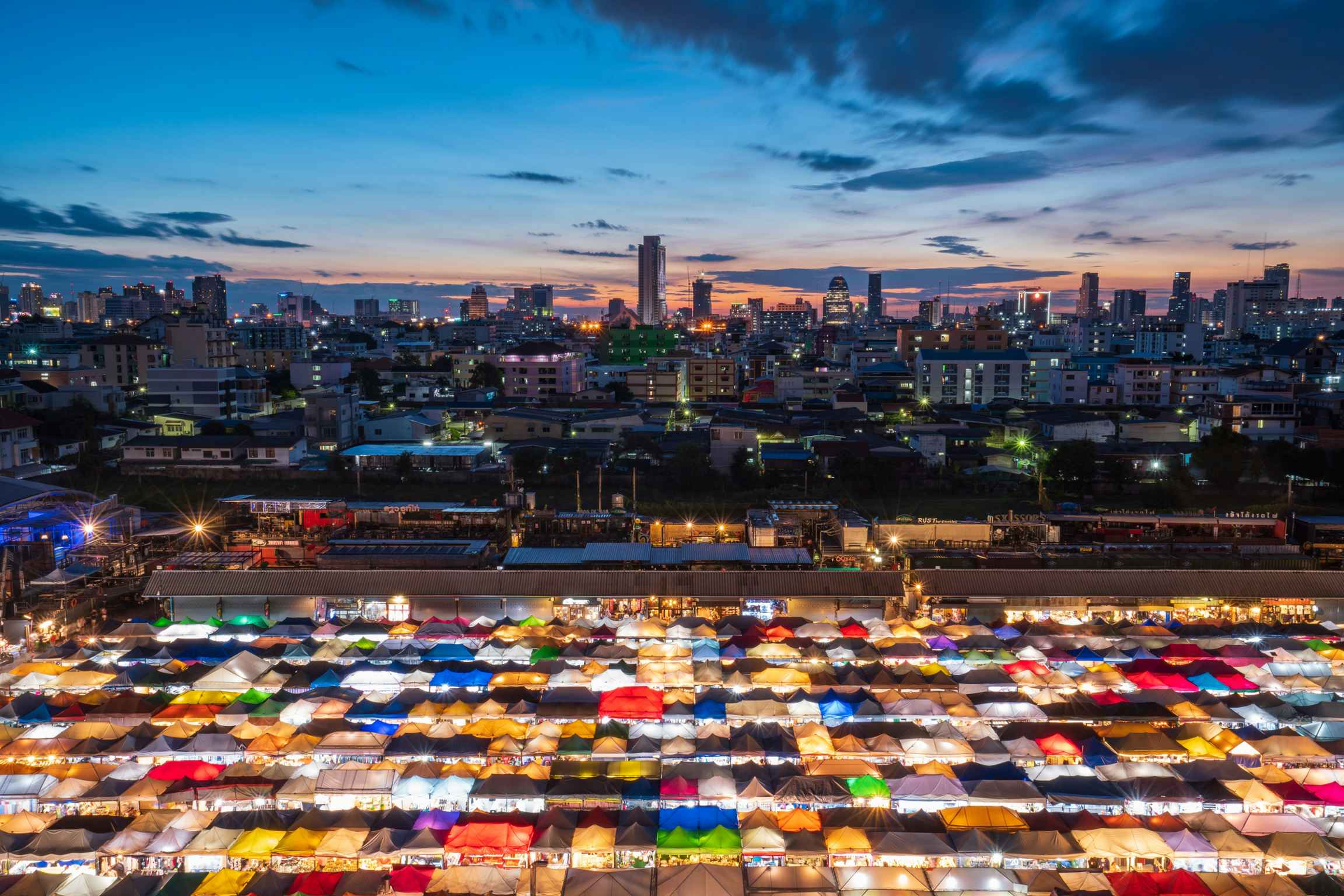
That is the structure of a world we built ourselves: interdependent, fragile, and harder to forecast with every passing year.
Complexity cannot be modelled
Economists are good at measuring the past. This past, together with stylized economic theory and strong assumptions, has led to economic models that allow economists to forecast. Forecasts in general extrapolate the relationships we uncovered in the past, assuming nothing else changes. That’s why economists are pretty mediocre at forecasting. There forecasts are magnificent – apart from anything unexpected happening. The achilles heel of model-based forecasting is fundamental uncertainty: the situation where not only outcomes but the probabilities themselves are unknown.
Frank Knight drew the distinction between risk and uncertainty in 1921. Risk is measurable, quantifiable. Uncertainty is not. When a new war breaks out with the US as a party, when supply chains reorganise in real time, when countries revise their energy policy and households and companies adjust their behaviour, you have entered the domain of genuine uncertainty. A macroeconomic model cannot be your guide there. It can organise scenarios, map sensitivities, maintain internal consistency. But it cannot tell you what will happen, especially not if something like it has never happened before. As a consequence, not only economists, but also central bankers and policymakers will always be behind the curve.
In our Advanced Economies Outlook and Emerging Markets Outlook, we use three scenarios to navigate this. That discipline is useful. It forces clarity about assumptions and maps the range of plausible outcomes. But we should also be honest: scenarios are a tool for structured thinking, not a substitute for knowledge we do not have. The world moves faster than the frameworks we use to understand it. It moves so fast that we decided to run with three scenarios, without even picking one as our base scenario.
You might wonder why we still make outlooks. The reason is that, despite the uncertainty, looking forward is essential. Even in a complex and uncertain world, we need to structure our thinking and make decisions. And decisions are made contingent on expectations about the future. We owe it to our clients and colleagues to forecast the best we can, figure out what we can. We just need to remember that the future might well look completely different from all three of our scenarios.
Two complications make this all the more likely. Substitution effects cascade in ways no model fully tracks. India switching to coal as oil prices rise drives up coal prices for Pakistan, which depends almost entirely on Gulf states for oil. Feedback loops run through the system, connecting shocks across countries and sectors in ways that only become visible after the fact.
The second complication is interdependence as a weapon. Iran would not have closed the Strait if it had not realised that closing it was a source of geopolitical power. Precisely because the world is so intertwined, asymmetric warfare works. A relatively small power can cause an enormous economic shock. Interdependence does not make wars smaller. It makes them different. And it makes them harder to win.
Geo-economics is political economy
There is a further lesson. Macroeconomics traditionally concerns itself with markets, prices and allocation. But the economy we now have can better be explained by geoeconomics: the study of how international power rivalry shapes economic policies and outcomes, and vice versa. Trade policy has become an instrument of power. Energy flows are a security question. Investment decisions are not only based on expected returns but also on strategic positions.
In that world, economics is no longer a technical discipline. It has become political economy. Who pays for the reconstruction of critical infrastructure? Who benefits from higher oil prices and who bears the costs? Which countries build new pipelines, and why? Answers to those questions cannot be found in a model. They depend on power relationships, alliances and political choices. Geoeconomic tools, from sanctions to embargoes, do not reliably substitute for armed conflict. Sometimes they provoke it.
This is what the fossil fuel dependencies of Europe on Russia made clear at the start of the Russia-Ukraine war, what the Taiwan tensions might do to semi conductors, and what now the Middle East war makes clear. Trade is no longer about opportunities but about dependencies. The question is no longer who we can trade with, but on whom we depend, and how vulnerable that makes us. As our Emerging Markets Outlook shows, countries with concentrated energy dependencies and limited fiscal space are confronting a structural question about sovereignty; Do these countries have the possibility to reduce their strategic dependencies or is their only option to pay the high energy price. A macroeconomic model has nothing useful to say about that.
Richer on paper, poorer in reality
This geo-economic world makes us collectively poorer. Not temporarily. Structurally.
Trade organised around strategic dependencies is less economically efficient than trade organised around comparative advantage. Duplicate supply chains, strategic stockpiles, defence spending: these are all costs that consume welfare gains. Geoeconomic fragmentation, as the IMF has documented, has measurably negative effects on GDP, investment and industrial production, with the harshest impacts falling on emerging economies that never designed these rules in the first place. Regretably, geoeconomics also will not be an efficient way to save the climate. While lower economic activity could help drive down greenhouse gases, the duplication of supply chains, stock piling and defence spending all imply ecologically wasteful forms of economic activity are set to expand.
We are busy arming ourselves, defending ourselves, insuring ourselves. Meanwhile populations age, public infrastructure deteriorates, and the energy transition accumulates delays. The costs of this geo-economic world are partly financed by investing less in the future.
What is the best advice this economist can offer? Prepare for a different world. Build resilience. Invest in defence, but also in energy and resource independence, which for Europe means renewable energy and a circular economy. Investing in independence also means living more frugally where possible. You don’t depend on what you don’t use anyway. Find new allies. And be honest about what all of this costs.
Because anyone who promises it will be fine is simply telling you what you want to hear.