
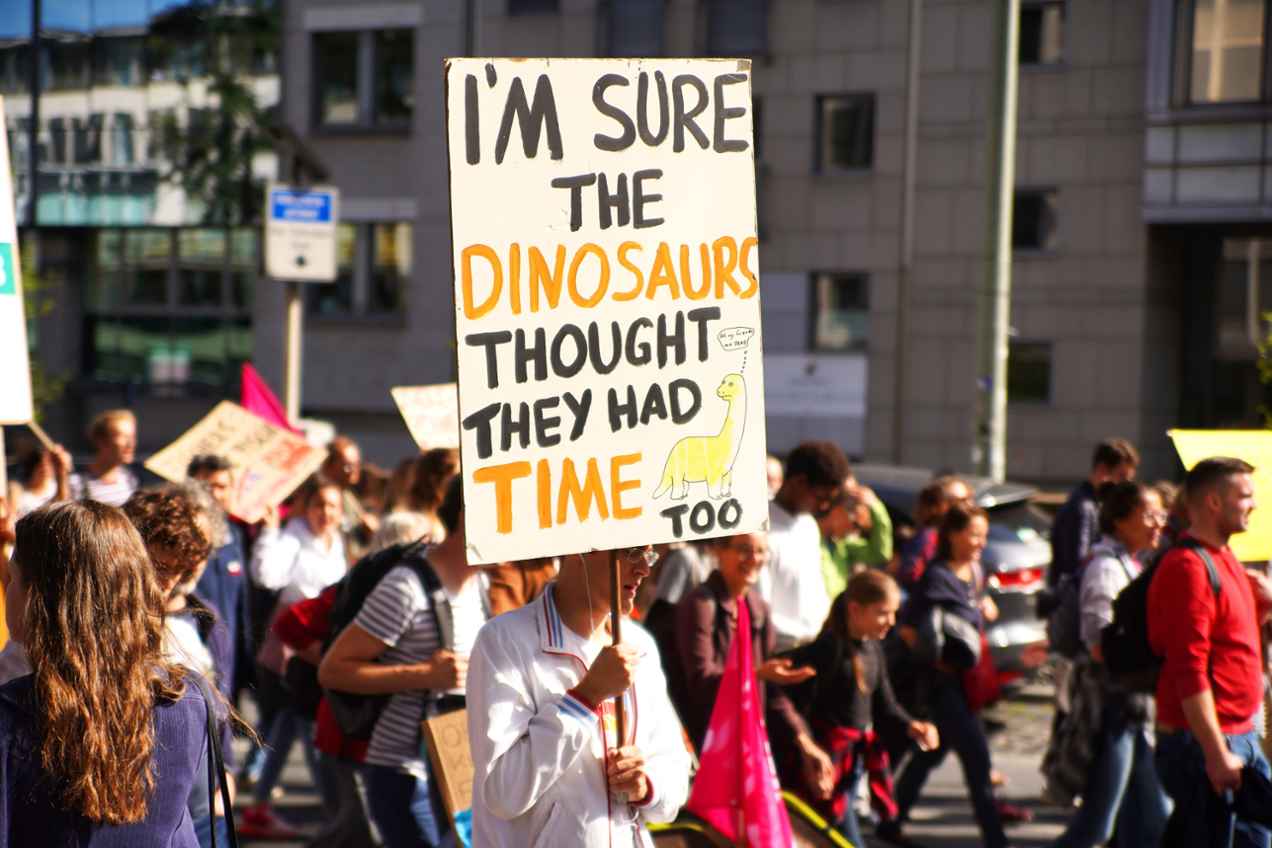
This summer, it seemed like many people around me were experiencing climate anxiety. It felt like that thing that we were all afraid of, which until now had felt kind of distant and abstract, suddenly entered our lives. The monster under our beds turned out to be real, and it’s not a friendly one.
And I honestly recognize these feelings and worries. I work as a researcher for a bank that tries to make the world a better, more sustainable place. In practice that means seeing many initiatives and changemakers fighting for this ideal. But it also means monitoring negative developments – and lately there have been a lot: sustainable legislation getting pushed back or watered down, fossil financing on the rise again, the rapid approach of the global warming threshold of 1.5°C above pre-industrial level.
So how do we, me included, face our climate anxiety, without sticking our heads in the sand or losing hope?
A shared experience
First, let’s look at what exactly it is we are dealing with, and at which scale.
Climate change has brought us a whole range of new emotions, including climate rage, climate grief, climate depression and climate anxiety. These emotions can arise from direct experiences, such as losing a home, livelihood or local ecosystem due to climate change (or related activities), or from indirect exposure: witnessing these things happen to others, in real life or on the news, or fearing they may happen in the future.
Climate anxiety is widespread. In a study of 10.000 young people across ten countries (including the UK, France and Portugal), nearly six in ten said they were very or extremely worried about climate change.

It is of course important to remember that many communities that face the most severe consequences of climate change are in low-income countries and small island states, and they generally have the fewest resources to adapt.
Yet, climate anxiety in Europe is also valid, and no longer merely related to future scenarios or distant countries. Europe is warming at twice the global average rate. The last few years brought us numerous extreme weather events: from floods in Valencia, Belgium, Germany and the Netherlands, landslides in the Swiss Alpes, a Europe-wide record-breaking heatwave, and unusually severe wildfires around the Mediterranean. Unlike the monster under our beds, the consequences of climate change are real – also in Europe.
From anxiety to hope
So how do we deal with our climate emotions? Many books and articles have been written about this subject already, giving a name to our ‘Earth emotions’, placing us within ‘Generation Dread’, helping us realise that ‘It’s not you’ and giving us ‘A field guide to climate anxiety’. They all discuss different tactics and strategies for dealing with climate emotions, but many of them come down to the same thing: the goal is not to get rid of our climate anxiety, it’s to change our relationship to it.
Accept it. Speak out about it and find others who feel it too. Let climate anxiety be the thing that brings us together and lays the foundation for collective action. Because climate change is a topic where real change cannot come only at the individual level, but has to be brought about on a systems level and through collective efforts. Use your climate anxiety as a source for connection and collective action.
Hope is not something we wait for. It is something we create by acting it out.
For me this is also where the difference between ‘optimism’ and ‘hope’ comes in. To quote Czech writer and statesman Vaclav Havel: “Hope is definitely not the same thing as optimism. It is not the conviction that something will turn out well, but the certainty that something makes sense, regardless of how it turns out.”
Hope means believing the possibility of something is not zero, however small the odds, and being willing to fight for it because that is the right thing to do. Hope is not something we wait for. It is something we create by acting it out. We create hope when we move our money away from fossil fuels. When we join a local action group. When we write a letter to our pension fund, attend a protest, choose a meaningful job, speak up in our communities or support those already building alternatives. Not because success is guaranteed, but because the odds are not zero yet, and we are still fighting.
This summer, the monster was no longer under our beds, but out there in the real world. We saw it in the drying farmland, we felt it in the heatwaves, we smelled it in the smoke of the wildfires. Many of us felt scared, angry, hopeless, sad. And that is valid. But climate anxiety does not have to paralyse us. We can, no we must, turn it into conversations, connections and collective action. Only then is there hope – true hope, not unfounded optimism – that we turn the tide.