
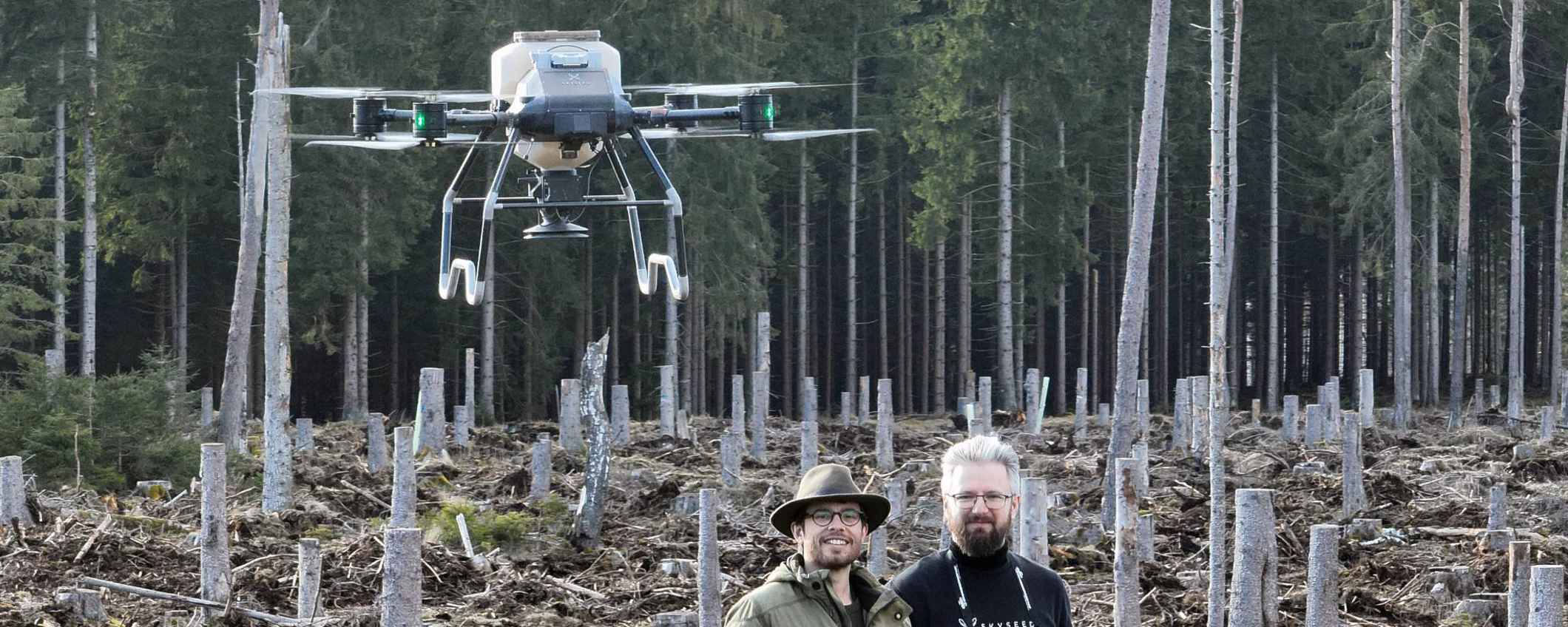
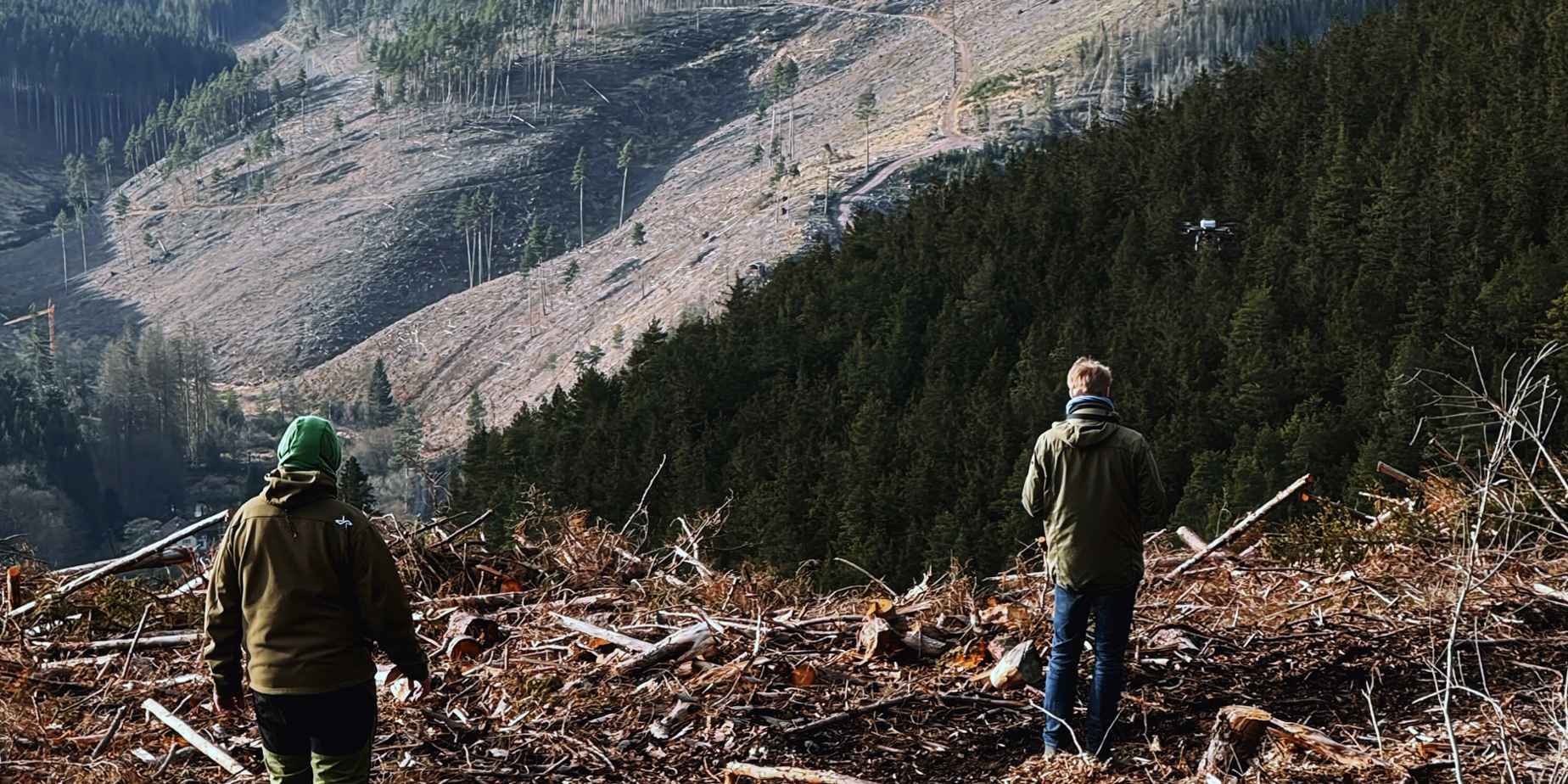
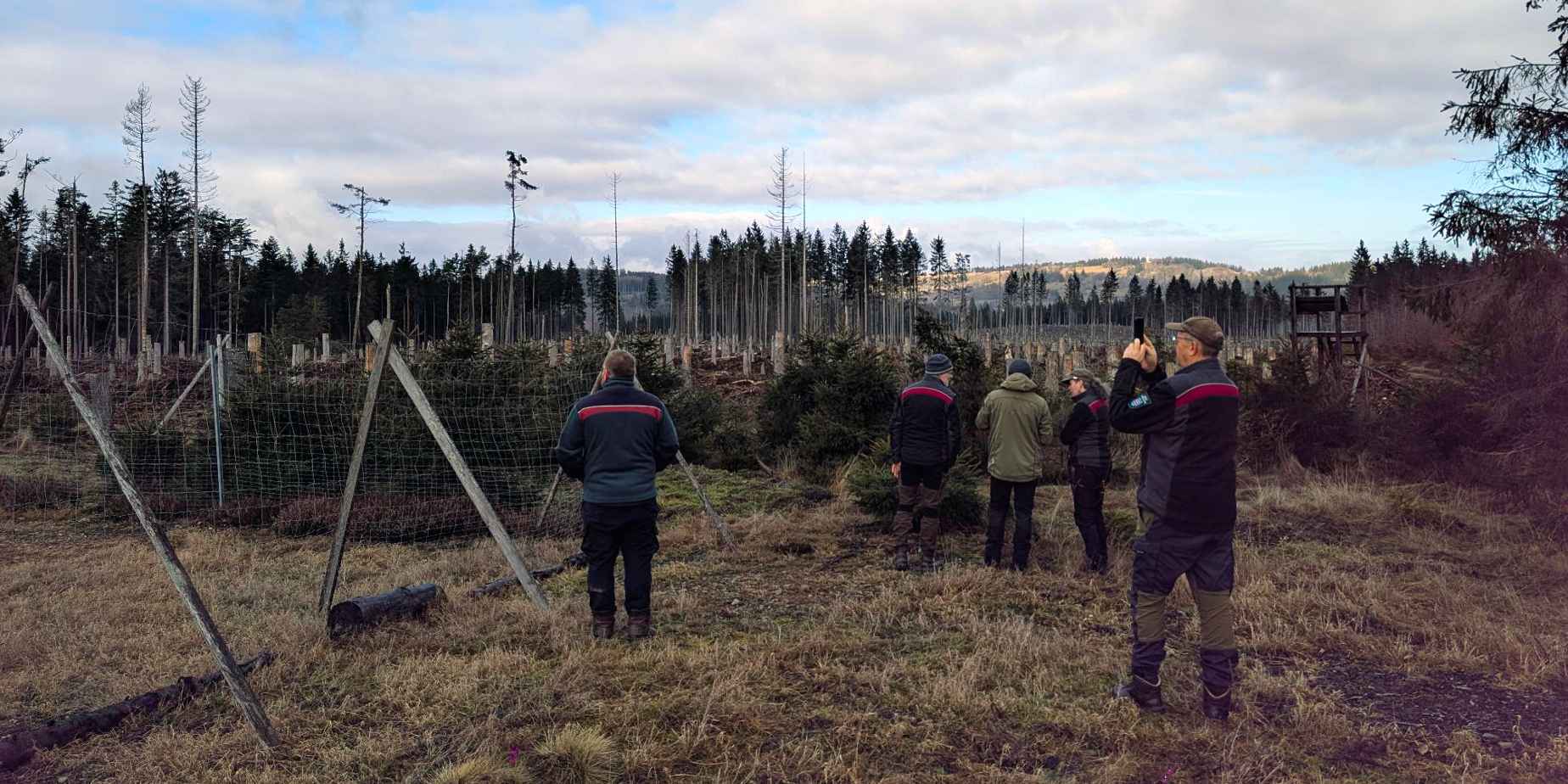
Like many forests across Germany, this one had been planted as a monoculture. It was filled with fast-growing spruce, optimised for timber. Decades ago, it made economic sense. Today, it is failing. Heatwaves, drought and bark beetles have taken their toll. What remains looks like a forest but behaves more like a plantation on borrowed time. That walk stayed with Dominik Wind. In conversation with his co-founder, Ole Seidenberg, it gradually grew into the idea that would become Skyseed.
A silent crisis in Europe’s woods
Skyseed’s vision tackles a very real problem. Across Europe, millions of hectares of forest are under threat. Decades of single-species plantations (often fast-growing conifers planted for timber) have left woodlands brittle and exposed.
In Germany alone, hundreds of thousands of hectares of forest have been damaged in recent years by storms, prolonged droughts and bark beetle infestations. Large areas of spruce forest have collapsed so rapidly that some forests are no longer absorbing carbon, but releasing it instead, The Guardian reported. These simplified forests may look productive, but ecologists warn they are particularly vulnerable when conditions change.
Climate change is now exposing that weakness. Trees that once formed the backbone of European forestry are struggling to cope with longer droughts, higher temperatures and new pests. What was designed for efficiency is proving ill-equipped for resilience. Even stalwart trees like Norway spruce (once the bread-and-butter of forestry) are wilting under prolonged summer droughts.
From monoculture to mosaic
To survive future extremes, European forests must be rewoven with diversity. Mixed woodlands, including oaks, birch, firs, and a rich understory of shrubs and herbs, are far more resilient to storms, fire and disease. Richer forests also safeguard soil and store carbon more reliably as the climate warms. But turning a vast sea of uniform trees into a complex ecosystem is a daunting task. It calls for scale, speed and a dash of creativity.
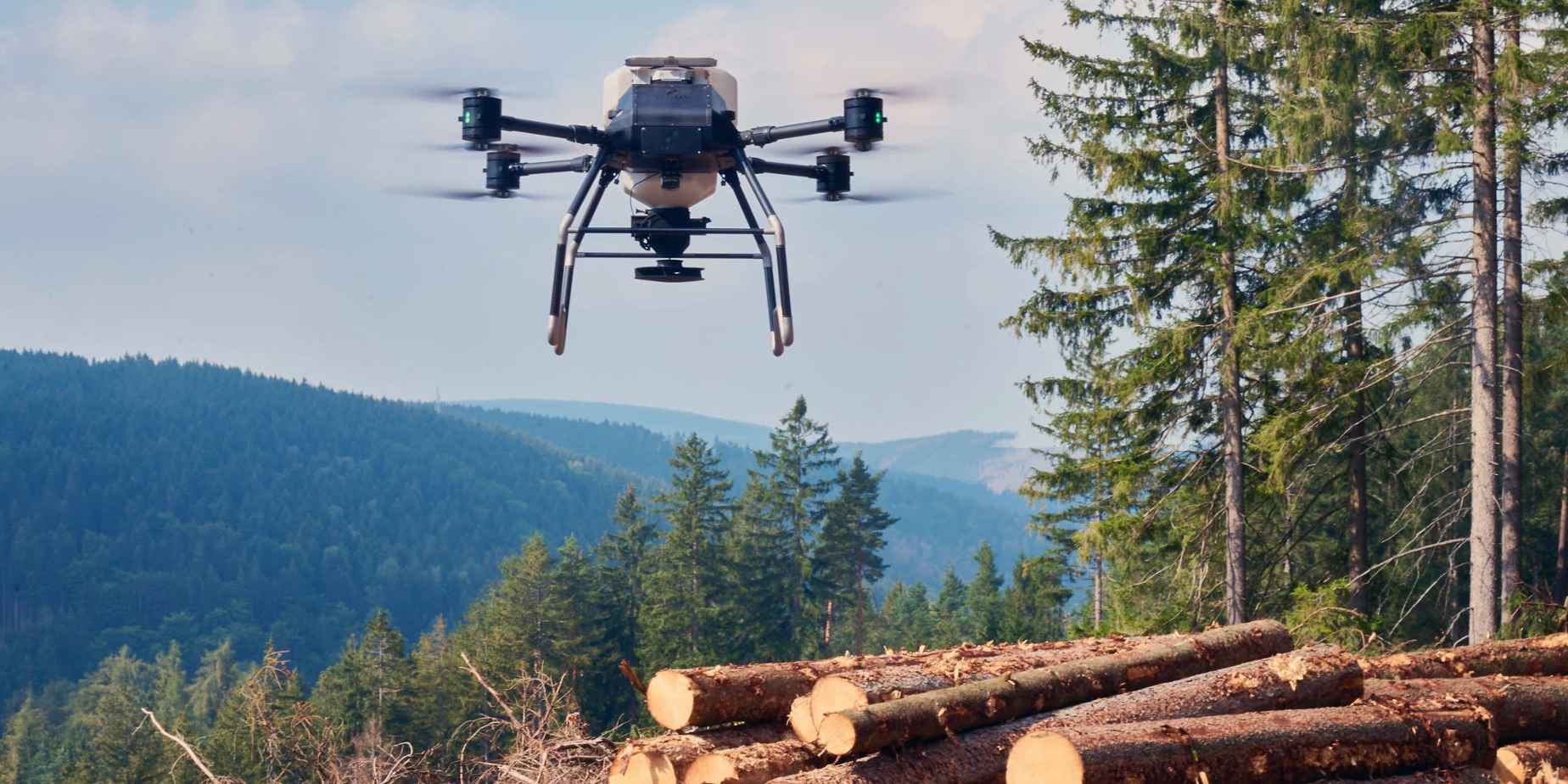
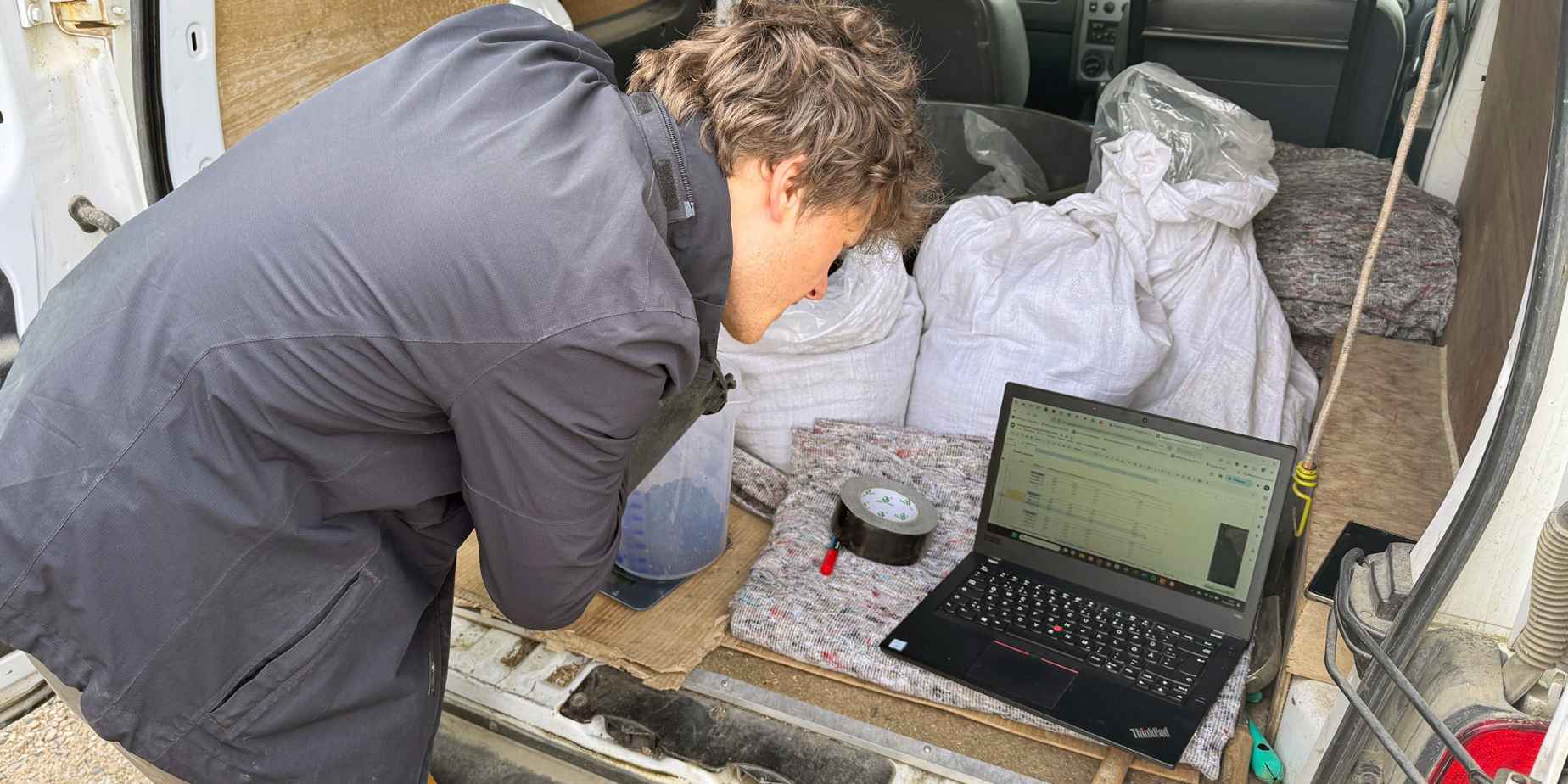
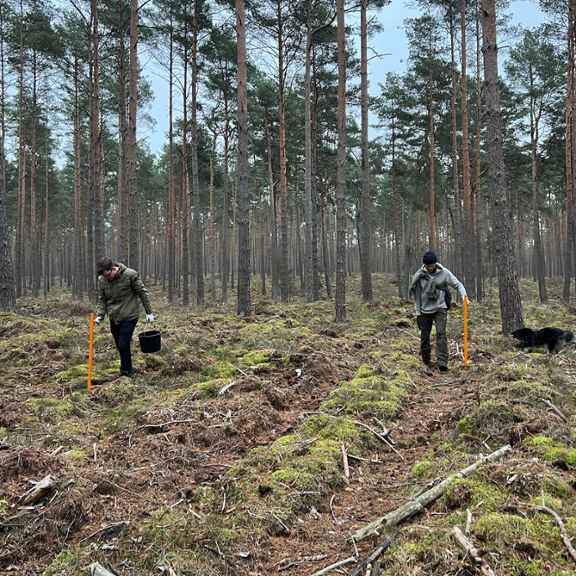
Skyseed steps into this breach. Launched in Berlin in 2021, the start-up brings direct seeding into the modern age. In practice, that means coating forest seeds with a carefully composed, site-specific pellet and then dispersing them by hand, drone or machine. The combination of customised pelletised seed, seeding services and deep ecological expertise is novel in Europe. “Smart and sustainable reforestation,” as its incubator describes it on futureforest.de.
In effect, Skyseed is learning from nature. Rather than ferrying saplings in by the hundreds, it scatters millions of tiny tree precursors over the land, much as a tree would broadcast its own seeds from high above. The approach has drawn growing attention in Germany. In a recent ZDF television documentary on biodiversity and forest recovery, Skyseed’s method was highlighted as a practical way to restore forests at scale.
Planting the seeds of change
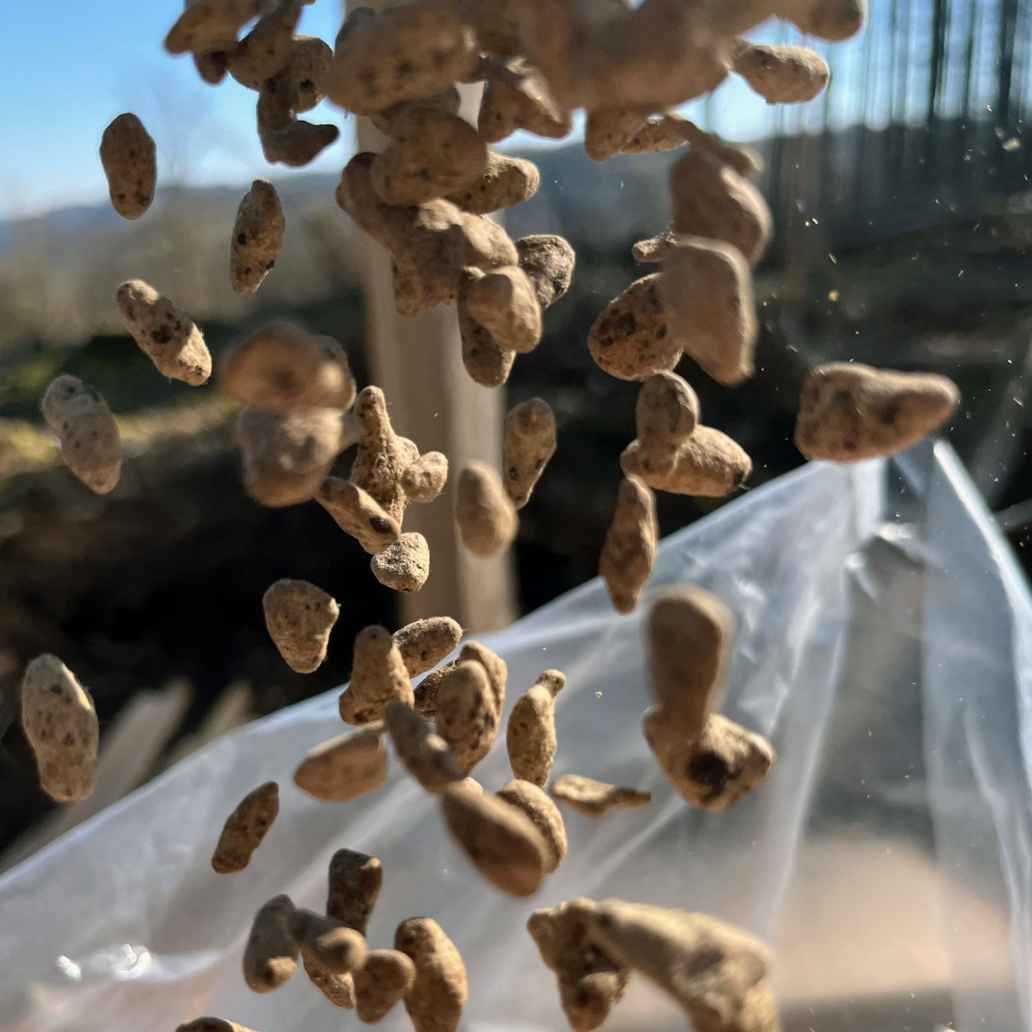
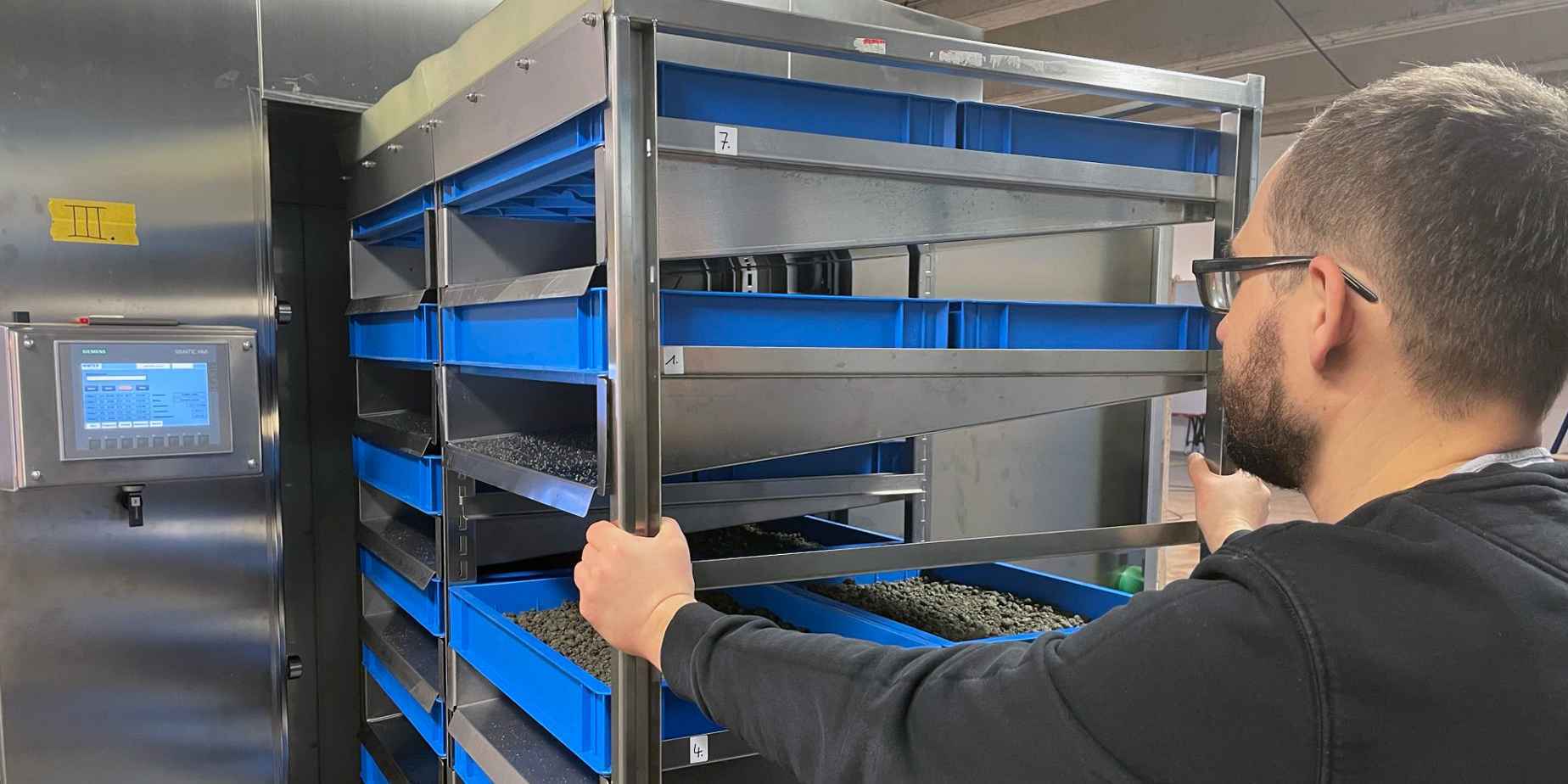
Each Skyseed capsule is a little factory of life. Inside the grain-sized pellet sits a tree seed, along with a carefully balanced mix of minerals and microbes, designed to support early growth without overwhelming the seed. Depending on the soil type and project goals, a thin clay layer may be added to provide weight and stability. The exact composition is patent-protected and specially formulated for forest use. It serves three purposes at once: it protects seeds from being eaten, helps retain moisture and supports gradual establishment in the soil. Birds and rodents do not recognise the pellets as food. And even if a capsule is displaced, its contents are buffered against heat and drying out.
Field tests show that germination rates can rise significantly. Under favourable conditions, up to 70% of Skyseed’s coated seeds take root. This is a marked improvement compared to bare seeds. Conventional broadcast seeding often yields far lower results, as seeds are easily blown away, eaten or lost. Here, the pellet’s microbe-rich structure helps each embryo settle into the soil. Practically, this makes a big difference. Skyseed estimates that direct seeding costs roughly half as much as manual planting of saplings. There is no need for large planting crews, and no loss of young trees due to planting shock.
The coated seed also allows each tree to develop a strong, natural root system. Instead of coiling inside a pot, the taproot grows straight down into the soil. Early comparisons illustrate the effect clearly: while a two-year-old nursery sapling often has shallow, stunted roots, a tree grown from direct seeding shows a single, deep taproot extending into the earth. In the age of climate change, that depth matters. Deep roots anchor trees and allow them to reach water far below the surface, increasing their chances of survival during prolonged droughts.
Scaling up nature’s comeback
Skyseed’s blend of ecological insight and practical technology has attracted investors as well. In 2025, Triodos Regenerative Money Centre joined a consortium led by N-Bank Capital, providing growth capital to the company. Judith Bastiaans, Investment Manager at Triodos, explains: “We see this as a scalable solution for forest restoration, improved resilience and climate adaptation. Science and soil come together in a simple idea with a big promise. A small capsule of seed carries within it the future of a forest. This is planting hope at scale. A solution that quite literally comes from the skies to the soil.”
The funding will be used to expand production capacity, refine seed recipes, and strengthen sales and research teams. Within a few years, thousands of hectares per year could be diversified with native trees, shrubs and herbs. For Triodos, the investment reflects a broader goal, making finance work in harmony with nature’s capacity to regenerate.
The return of the wild
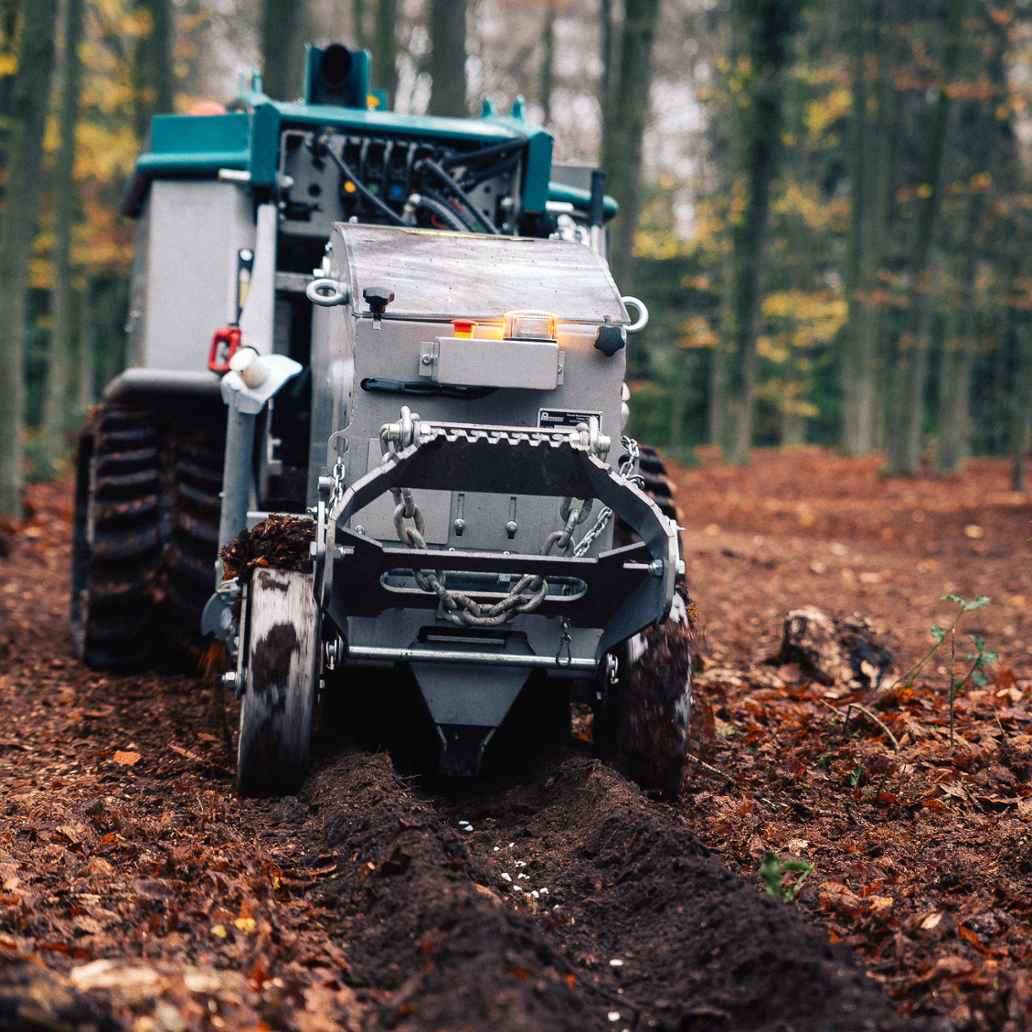
The real impact will unfold over time. Years from now, the seeded ground will tell a different story. Quiet clearings of dead spruce may transform into young mixed woodland, with oak, ash and maple emerging alongside firs, while wildflowers and berry bushes reclaim the forest floor. In a decade, what was once a uniform plantation could become a living ecosystem again, with insects, birds and small mammals returning. Each Skyseed pellet dropped today may one day become a sturdy trunk, offering shelter to a robin or a squirrel.
“If we can help seeds survive those first critical months,” says Ole Seidenberg, “the forest can do the rest itself.” It may not look like traditional replanting at first. But this gentle approach aligns closely with how nature works. Tiny seeds fall, take root, and gradually carry the story of the forest forward. For all who care about the future of Europe’s woods - hikers, farmers, foresters and town planners alike - this is an encouraging evolution. A way to fund and sow resilience, one seed at a time.