
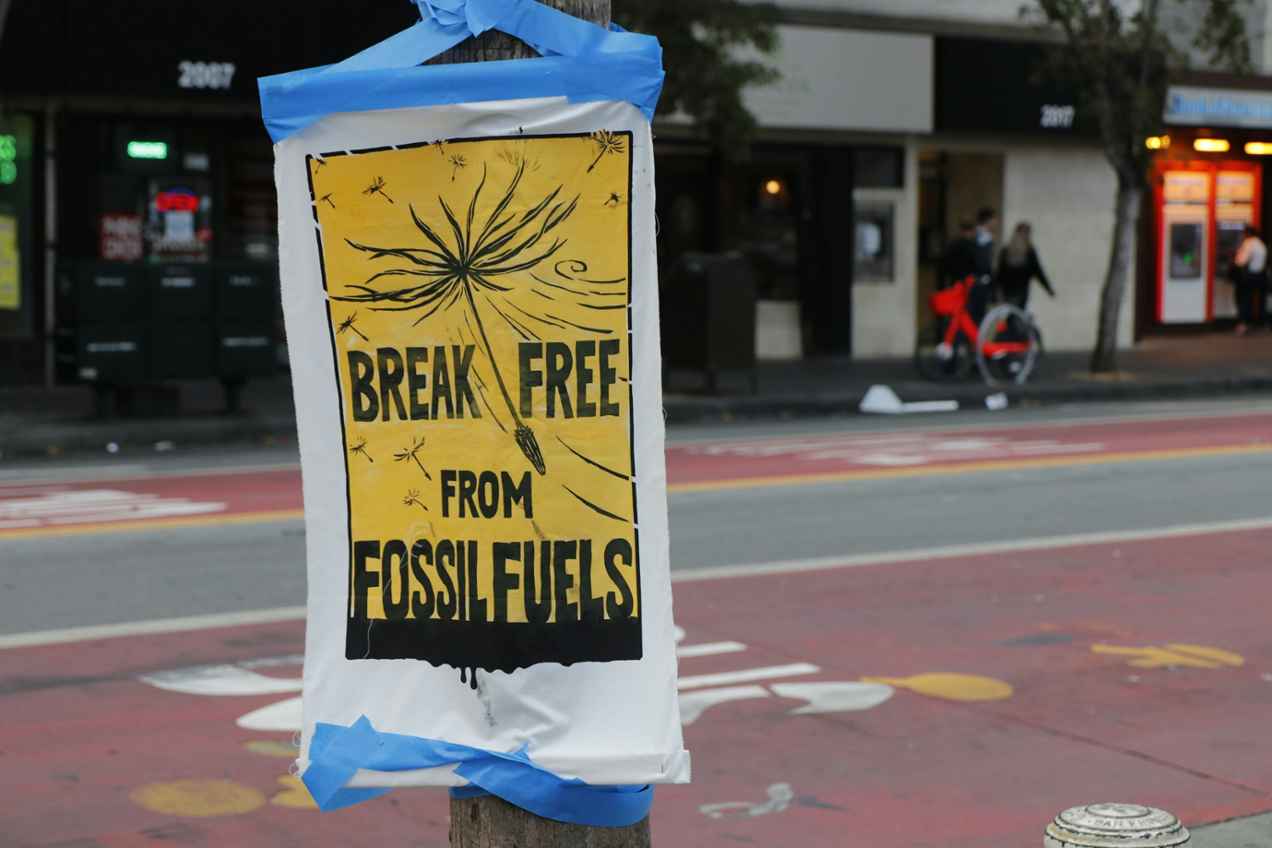
According to its findings the world’s 65 largest banks increased fossil fuel financing by $64 billion to $906 billion in 2025; the second consecutive rise after earlier declines. Of that amount, $508 billion was directed to companies directly involved in expanding fossil fuel developments, such as building new oil rigs or opening fracking fields. Even though science has been telling us for years that fossil expansion is not consistent with keeping the world in livable limits, well below 2 degrees Celsius.

Any climate action plan requires a financial action plan. Financial flows determine which sectors expand, which technologies scale and which activities decline. A loan for new a gas field, for example, creates a financial obligation to continue extraction in order to repay the debt, locking in emissions for years to come. Our economies and subsequent climate outcomes are ultimately shaped by investment decisions.
Why financial markets on their own won’t solve the problem
When climate finance enters the conversation, the narrative too often focuses on investment in green solutions and distant net-zero pledges, often at the expense of the harder question: how do we actually stop emissions from rising today? As a result, fossil fuel financing can continue. Whilst some individual impact investors and ethical banks have been excluding the fossil fuel production and exploration industry for years, this clearly doesn’t move the needle enough.
Meanwhile, voluntary commitments within the sector and transparency requirements are proving insufficient. The rapid decline of the Net Zero Banking Alliance (NZBA) is a case in point: showing that sustainable commitments prove frail under pressure (be it political or profitability concerns) and cannot replace legislation.
The findings of the Banking on Climate Chaos report show that we need overarching, deliberate financial policies to safeguard our future. Ending the dependence on fossil fuels is only possible if we limit fossil finance, even when it remains profitable. Accelerating the shift to renewables requires redirecting capital toward the techniques needed for decarbonisation, even when they are less profitable than fossil fuels. Unprecedented, uncertain climate risks will not show up in traditional backward looking banking risk models, as has been acknowledged by financial supervisors and central banks. In short: we cannot count on markets on their own to deliver.
A spectrum of policies that can steer capital
Credit and investment guidance refers to deliberate policy frameworks that actively shape the allocation of capital in line with public objectives. It does not mean financial institutions will be prescribed specific projects to fund at what rate. Instead, it could involve a spectrum of policies ranging from credit floors (such as minimum lending quotas for green sectors) or investment ceilings (caps on fossil fuel financing), loan-to-value ratio limits to discourage overleveraging in high-carbon industries, green bonds, or targeted adjustment of capital buffers to better reflect climate risks. For inspiration, we can look at international models: economist Daniela Gabor’s recently compared various “coercive credit regimes” in South Korea, Japan, India and China. These practices show that there are many ways to guide financial flows for transformative purposes.

Critics argue that steering finance distorts markets, yet financial markets are already shaped by public policy. Tax breaks encourage sustainable investments, while outright bans prohibit financing for cluster munitions. Even prudential frameworks such as Basel III shape lending behaviour. Denmark’s coordinated planning to scale up sustainable energy, including loan guarantees, demonstrate how holistic policy frameworks can drive systemic change. At the same time, mortgage interest tax breaks, fossil subsidies and agricultural subsidies illustrate how policy can also create unsustainable distortions.
Willingness is the lacking ingredient
If we do not phase-out fossil finance as society, we jeopardise our security and future. Credit and investment should be allocated to support the transition to more resilient, clean, and democratic energy systems. The International Energy Agency has shown that existing fossil fuel reserves are already sufficient to meet today’s and tomorrow’s demand. Moreover, when looking at the carbon budget still available for a 1.5°C pathway, a significant part of existing reserves needs to remain unextracted. This is incompatible with continued investment in new fossil fuel infrastructure.
The recent rise in fossil financing underlines a simple point: markets alone will not deliver the transition at the required speed. We already know how to generate clean energy, reduce emissions and build resilient economies. What remains uncertain is whether we are willing to direct capital accordingly.
If we are serious about climate goals, we must become equally serious about where credit and investment flow. Finance can serve people and planet instead of the other way round, if we guide it.