
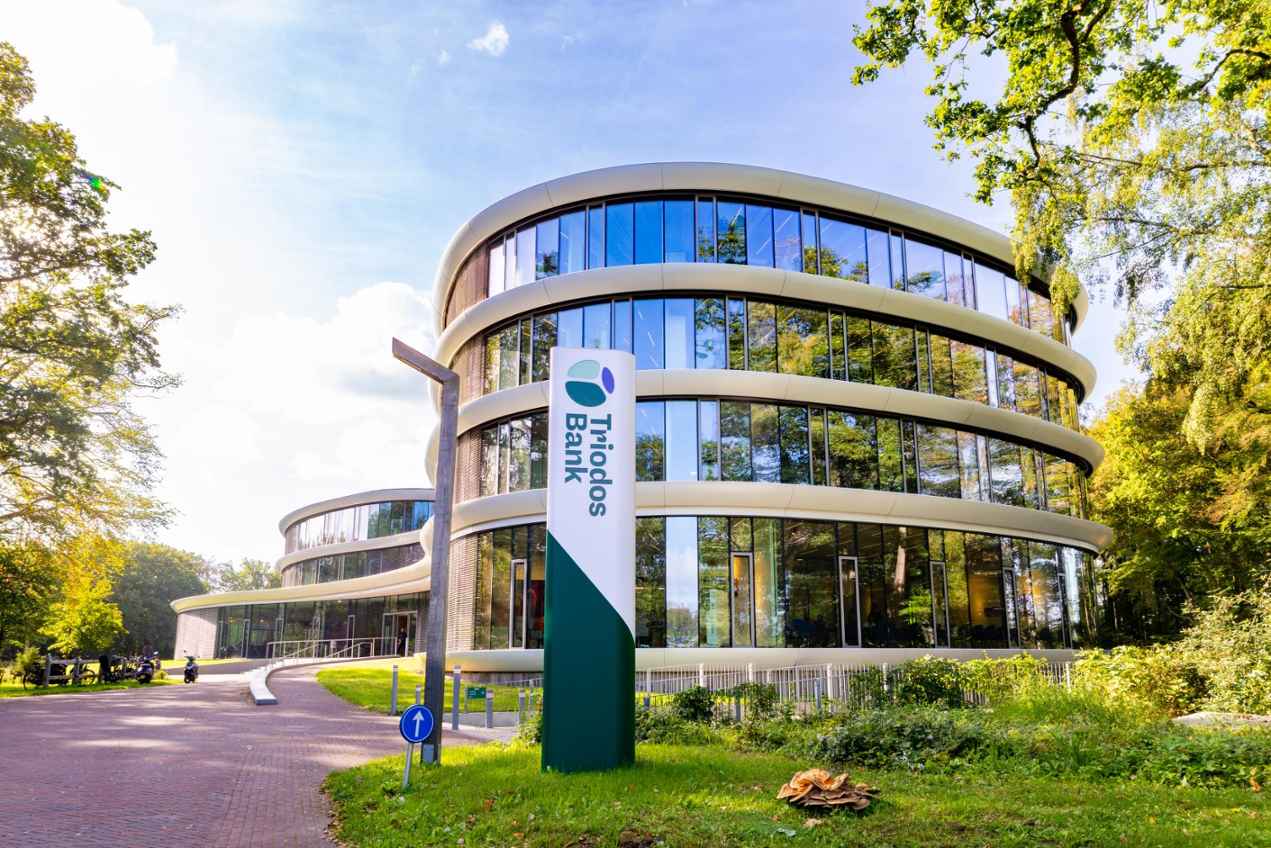
The recertification marks a new chapter in Triodos Bank’s long-standing relationship with the B Corp movement. In April 2015, we became the first pan-European bank to achieve B Corp certification, coinciding with the official launch of the movement in Europe.
Jacco Minnaar, Chief Commercial Officer at Triodos Bank: “We are proud to be among the first financial services organisations to be certified against these stricter standards. We chose to go through the new process at an early stage, because we see ourselves as a frontrunner in sustainable finance and we welcome the independent challenge to keep improving and to be transparent about where further work is needed.”
For Triodos Bank, recertification is both a recognition of progress and a commitment to continued improvement. By participating in the first group assessed against the revised standards, we intend to contribute our experience to the further development of a certification system that holds companies accountable for measurable positive change.
Minimum requirements
Rather than allowing companies to achieve certification by accumulating at least 80 points, strong performance in one area can no longer compensate for weaker performance elsewhere. Companies must now meet minimum requirements across seven impact topics, including climate action, human rights, fair work, stakeholder governance and environmental stewardship. The standards also introduce mandatory improvement milestones after three and five years.
This stronger approach is particularly important at a time when companies face increasing expectations to substantiate environmental and social claims. The certification process places greater emphasis on independent verification, measurable targets, transparent public reporting and evidence that policies are being implemented in practice. The revised standards also reflect the direction of European regulation, including the Corporate Sustainability Reporting Directive (CSRD) and the Empowering Consumers for the Green Transition Directive (ECGT/EmpCo).
Transparency about the findings
Although B Lab does not require B Corp’s to publish their recertification results, Triodos Bank believes in transparency whenever possible. As part of the independent audit, the auditor identified a number of minor non-conformities. Although these findings did not prevent recertification and do not point to a significant failure to meet the standards, they do require Triodos Bank to analyse the underlying causes, take corrective action if necessary and provide evidence to B Lab that relevant improvements have been implemented by the applicable deadlines in 2027.
We support the higher standards and will continue engaging constructively with B Lab to help make the framework as credible, transparent and effective as possible.
From the assessment several opportunities have arisen to further strengthen our existing practices and documentation. The minor findings include enhancing the visibility of grievance mechanisms, clarifying how human rights and environmental considerations can be evidenced as part of our procurement decisions, further develop due diligence processes for relevant suppliers and set targets for material impact topics that fall outside the scope of the B Corp impact themes.
“Being transparent about the findings is an important part of what this certification should mean,” Jacco Minnaar adds. “Most findings concern how we document, formalise or publicly demonstrate what we do. We will address each finding and use the process to strengthen our practices. At the same time, we believe transparency should apply to the certification system itself. Stakeholders should be able to understand not only that a company has been certified, but also how it is improving.”
From policies to demonstrable progress
At this stage, many requirements focus on whether companies have appropriate policies, actions, governance and targets in place. Over the coming years, the certification will need to show that these commitments translate into measurable results. Having a carbon reduction plan, for example, is important, but credible certification ultimately also requires evidence that emissions are actually decreasing.
The replacement of the previous public numerical score with mandatory requirements across different impact topics helps prevent strong performance in one area from masking shortcomings in another. However, the absence of a public score and the fact that audit findings are not routinely disclosed make it more difficult for stakeholders to compare performance or understand why an organisation has or has not achieved recertification.
“Moving away from a public score puts even more responsibility on B Lab and the B Corp community to demonstrate the credibility of the new system,” says Jacco Minnaar. “The real measure of success is not how many companies carry the label, but whether recertified companies can show that their impact is genuinely becoming greener and more social. We support the higher standards and will continue engaging constructively with B Lab to help make the framework as credible, transparent and effective as possible.”