

Through bold innovations in regenerative agriculture and zero-waste textiles, SEKEM is turning depleted land into thriving farms, waste into new resources, and social challenges into opportunities for empowerment. Their story offers not only hope, but a working model for how business, finance and community can regenerate both people and planet. Wherever you are.
What regeneration looks like
Regeneration at SEKEM is practical, multi-layered and ambitious. On the ground, you’ll find a carefully orchestrated set of measures designed to revive soils and water cycles. Like compost, cover crops, multispecies planting and agroforestry, solar-powered irrigation and smart crop rotations. These are not theoretical ideas, but everyday practices taught to thousands of farmers, tested in the field, and woven directly into the local economy.
Regenerative agriculture in action
A prime example is the Wahat project in the Bahariya Oasis. Here, SEKEM has turned over 1,100 hectares of once-barren desert into thriving biodynamic farmland, using a method that works with natural cycles and excludes synthetic chemicals. Since 2019 alone, 725 hectares have been revitalised. Through careful soil management, composting, renewable energy and biodiverse planting, the desert now yields organic cotton, vegetables and herbs where nothing grew before. SEKEM aims even higher. By 2057, it wants all agriculture in Egypt to be 100% sustainable and carbon neutral. This means massive tree-planting, careful water use, solar energy and composting.
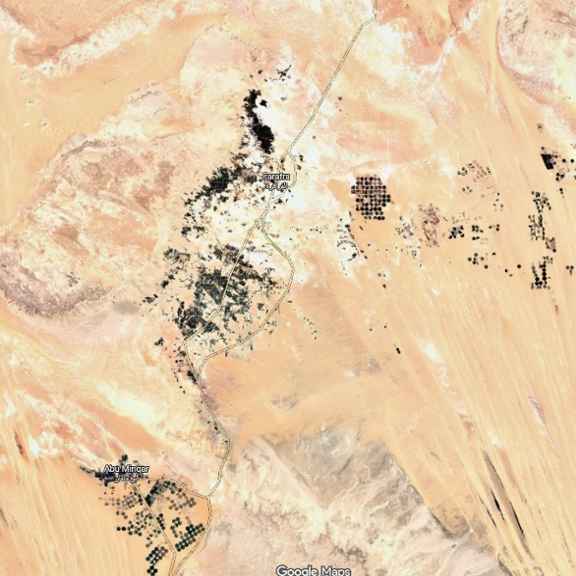
You can even see the scale of SEKEM’s work from space. On Google Maps, the Wahat site appears as a constellation of bright green centre-pivot fields carved into the beige desert. This is a visible reminder that regeneration is not abstract, but physically reshaping the landscape.
Turning carbon into community benefit
SEKEM’s approach is not just ecologically sound. It is also economically empowering. SEKEM helped establish the Economy of Love standard, which registers and verifies carbon captured by regenerative farming and turns it into tradeable carbon credits. These credits bring tangible income to farmers and local communities, making restoration financially viable as well as environmentally necessary.
In 2025, SEKEM awarded carbon certificates to 84 companies, each representing one tonne of CO₂ offset through regenerative farming at Wahat. According to Economy of Love data, SEKEM generated around 7,648 tonnes of certified CO₂ credits in 2021, increasing to 13,070 tonnes by 2024. This is a rare example of carbon farming that works at scale and benefits local people directly, not distant investors.
Less talk, more biology
Innovation at SEKEM means blending time-tested biodynamic principles with cutting-edge biological science. Field teams train farmers in composting, cover cropping, and the use of biofertilisers. These are living blends of beneficial microbes and fungi that boost soil health and resilience. Recent trials have shown that beneficial fungi can eliminate certain crop diseases efficiently, reducing the need for synthetic fertilisers and pesticides.
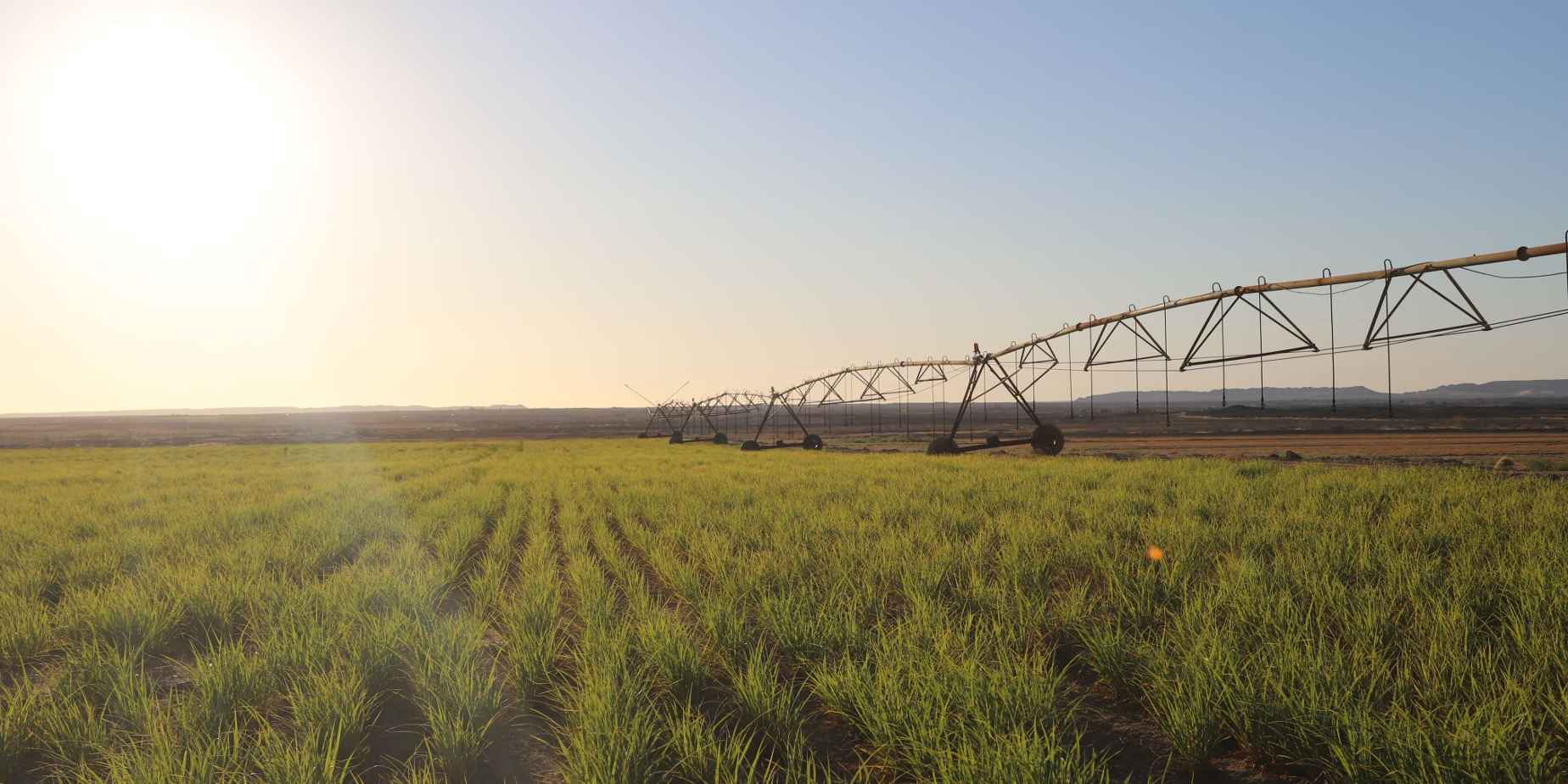
Circular irrigation systems nurture new growth, turning desert into fertile farmland.
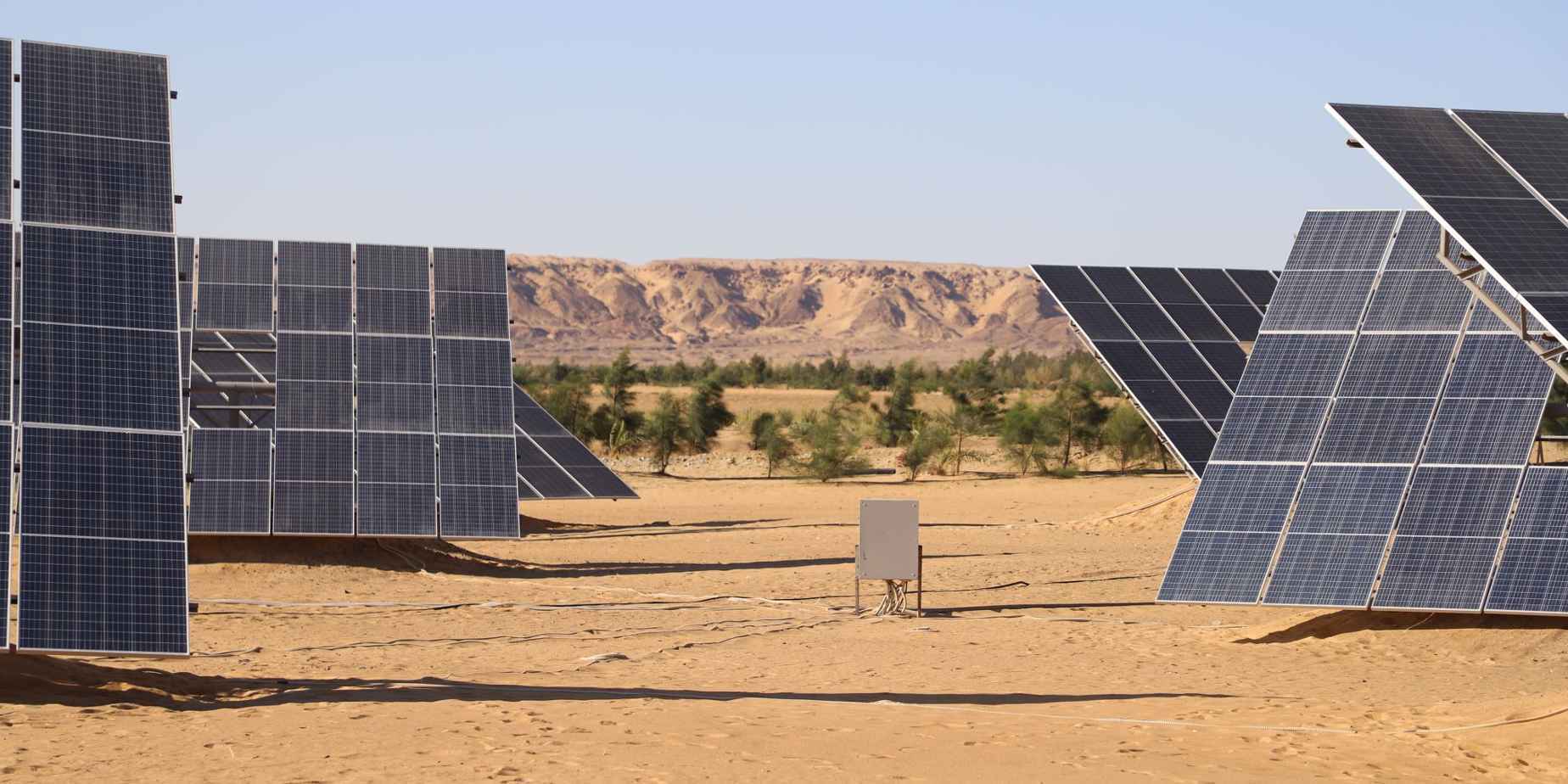
Solar panels power SEKEM’s sustainable agriculture in the heart of the Egyptian desert.
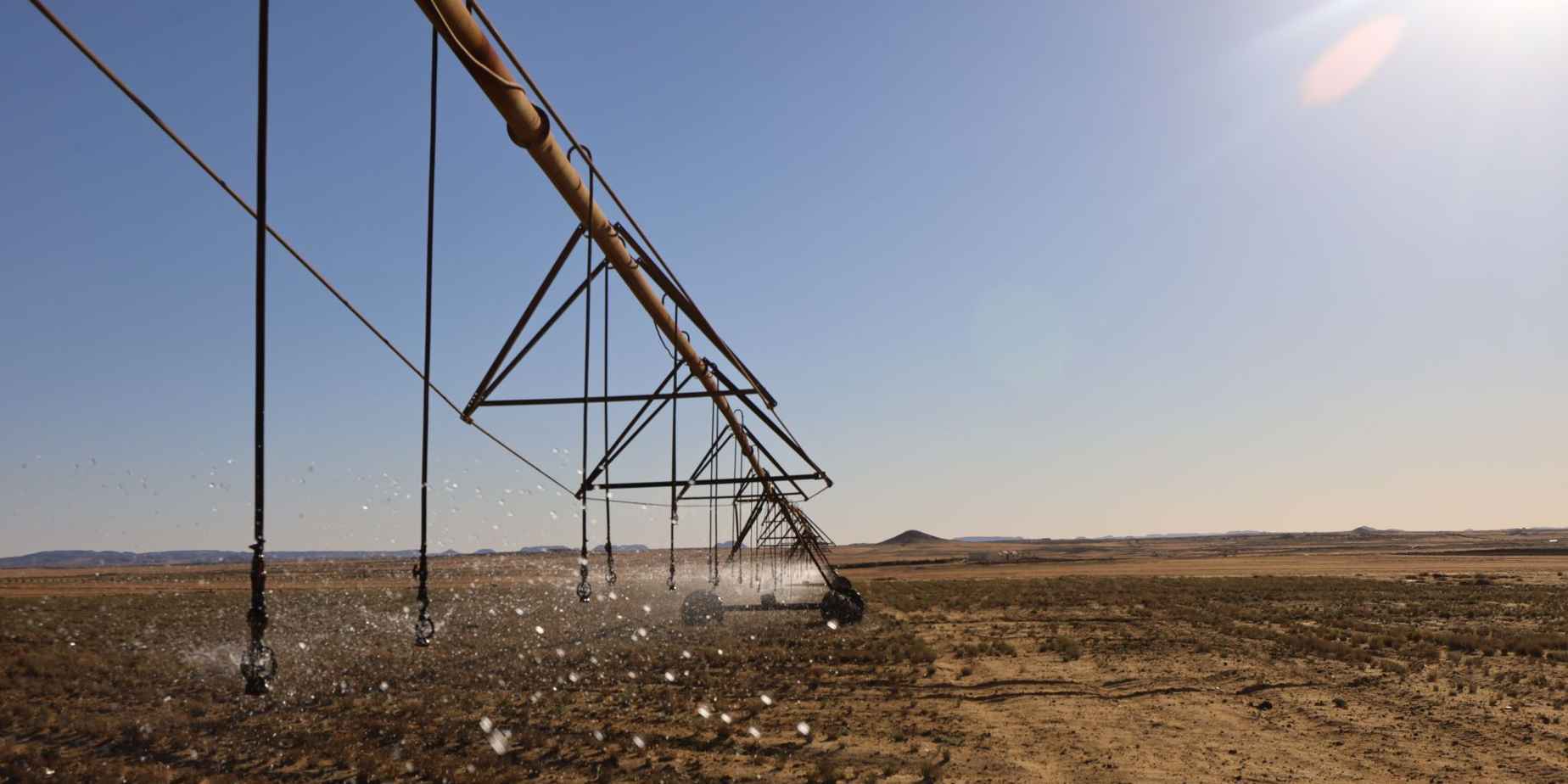
Advanced irrigation brings vital water to the desert, paving the way for regeneration in arid land.
From waste to clean energy
SEKEM also pilots surface biogas systems that turn animal waste into clean energy for cooking and heating, closing local nutrient and energy loops. In 2023, a pilot project reached 2,000 farmers, with ambitions to train 40,000 Egyptian smallholders in regenerative practices over the next two years. This was supported by partners such as the COmON Foundation.
Combining what works
This is not about romanticising the past or chasing technology for its own sake, but about combining what works. Biodynamics offer a long-term perspective on soil health, biological inputs accelerate recovery, and renewable energy secures water in arid conditions. This synergy is the reason why Wahat’s fields can now support crops and families where once there was only sand.
From seed to Demeter certified shirt
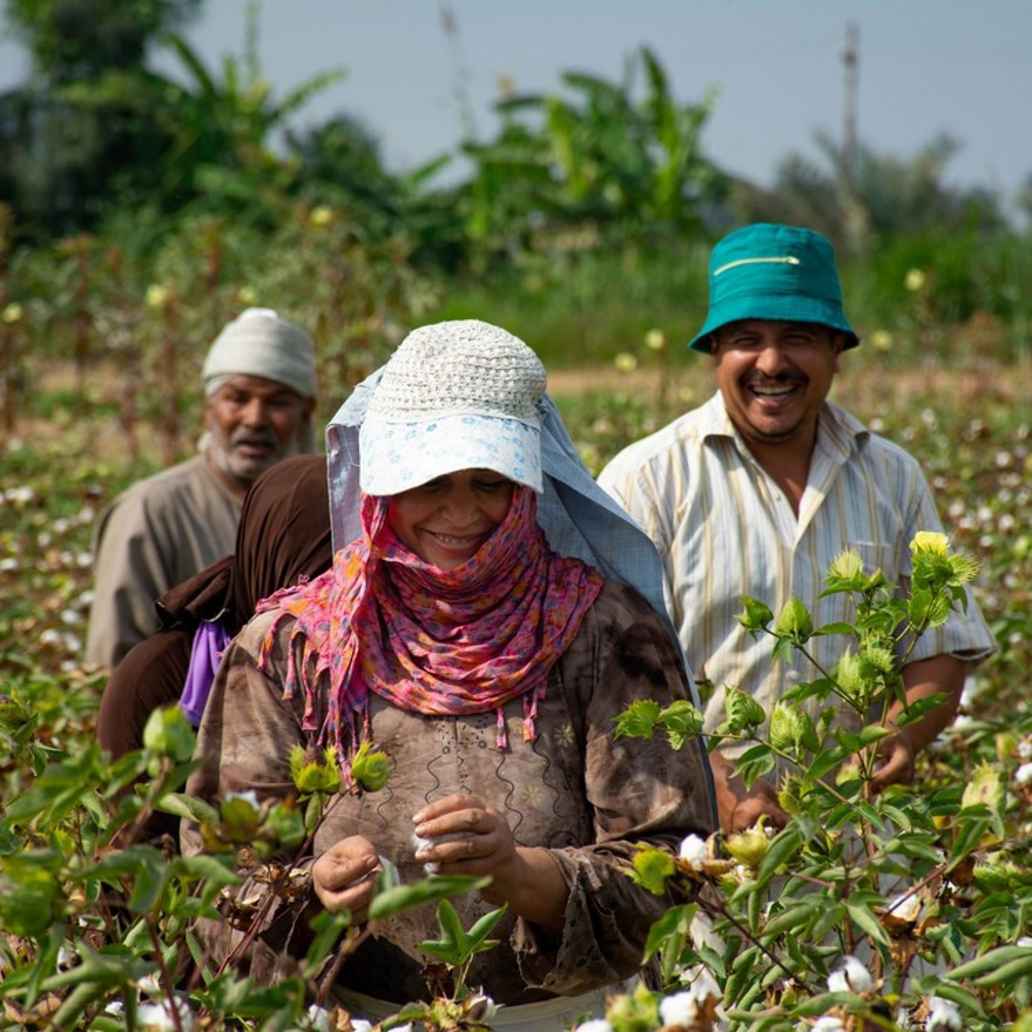
SEKEM’s impact goes far beyond farming. Through its textile companies, NatureTex and Isis, SEKEM processes organic, biodynamic cotton grown on its own land and by smallholder partners. The cotton is Demeter-certified, which is the gold standard for biodynamic agriculture. And the entire process is traceable from seed to finished fabric. This vertical integration ensures no chemical contamination and guarantees that SEKEM’s textiles are genuinely regenerative.
Closing the textile loop
SEKEM is pioneering circularity in fashion. New product lines use recycled fibres and plant-based dyes. While packaging and hangers are made from 100% recycled materials. The aim is a genuinely circular garment, with renewable or recycled inputs, low-impact dyeing with plant pigments, and materials designed for compostability at end of life.
Global collaboration for sustainable fashion
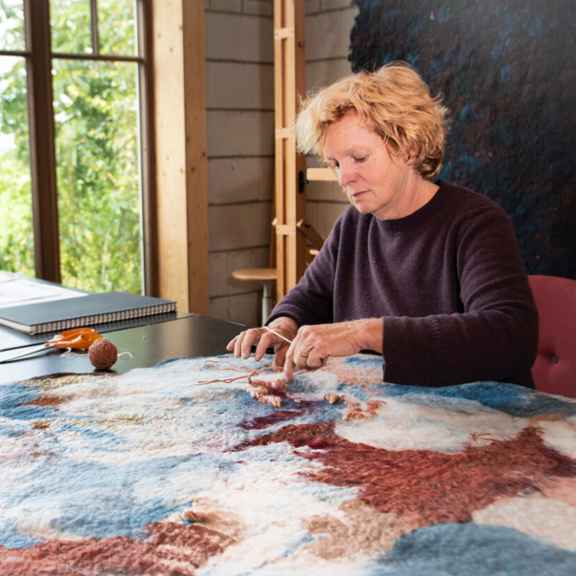
A striking example of SEKEM’s international reach is its collaboration with Dutch designer Claudy Jongstra. Her LOADS Collection features SEKEM-grown cotton and plant dyes, showing that biodynamic fibres can play a role in high-end, sustainable design. Through this partnership (sparked by a Triodos customer day), SEKEM is helping to reconnect the global fashion supply chain. While training women in natural dyeing techniques on its Egyptian farms.
Circular textiles
SEKEM continues to innovate with linen from locally grown flax, wool, and a diverse palette of plant dyes. Every new product line embodies circularity. Fibers come from regenerated farms, water use is minimized, and end-of-life biodegradability is designed in. SEKEM’s innovations are attracting sustainability-conscious brands. For instance, Claudy’s latest work in a Dutch restaurant uses SEKEM cotton and plant dyes to create a biodynamic upholstery fabric.
Community as the backbone
What truly distinguishes SEKEM is its social infrastructure. The SEKEM Development Foundation reinvests 10% of company profits into schools, vocational training, healthcare and cultural programmes. This is not charity, but a strategic choice to ensure that the people who drive SEKEM’s mission share in its benefits.
A culture of lifelong learning and wellbeing
Children attend SEKEM schools where they learn about farming, arts and sciences. The Heliopolis University is the only sustainable development university in the Middle East. It offers degrees that prepare students to lead the next wave of regeneration. The Health on Wheels clinic, supported by Triodos Foundation, brings primary care to 13 surrounding villages.
Championing equality and inclusion
SEKEM prioritises inclusion at every level. About 31% of staff in the NatureTex textile mill are women, supported by targeted training, health advice and on-site childcare. Programmes for people with special needs combine crafts, music and practical skills, enabling graduates to find meaningful employment in SEKEM’s ecosystem. These social systems do more than provide goodwill. They stabilise the workforce, raise local skill levels and create demand for SEKEM’s own products.
Why this matters to funders and partners
SEKEM is a rare example of a business that turns sustainability from a philosophy into repeatable, scalable practice. It has moved from pilot plots to integrated supply chains, linking restored land directly to livelihoods and markets. Revenues from organic premiums, certified textiles and verified carbon credits are reinvested to support further regeneration. The ambition to train 40,000 smallholder farmers in sustainable agriculture (backed by international partners) underscores SEKEM’s role as a catalyst for systemic change.
What SEKEM can teach others
SEKEM’s core lesson is that regeneration works when ecological practice, market logic and social investment are treated as one system. Technical solutions like compost, biofertilisers, solar pumps are critical. But so are strong institutions and fair markets. Without supportive policies, buyers for regenerative goods or revenue from carbon, the transformation cannot scale.
SEKEM’s blueprint is therefore practical, not poetic. It is about compost by the tonne, reliable irrigation systems, verified credits on a registry and design partnerships that pay farmers a fair share. These are the building blocks that can be copied, adapted and financed elsewhere.

Building a global network for change
True regeneration
SEKEM’s approach is spreading well beyond Egypt. Farmers and experts from Spain, China and across Africa have visited its fields to learn how to bring regenerative agriculture home. The Economy of Love standard is open to organisations worldwide, inviting others to join SEKEM’s journey towards a regenerative economy. In this way, SEKEM’s impact is quietly growing on a global scale.
To anyone seeking proof that sustainable transformation is possible, at scale and in practice, SEKEM’s story is essential reading. It demonstrates that degraded land can become fertile, that textiles can be both beautiful and circular, and that communities can flourish when they are at the heart of the design. SEKEM invites us all to reimagine an economy where people and planet thrive together.